


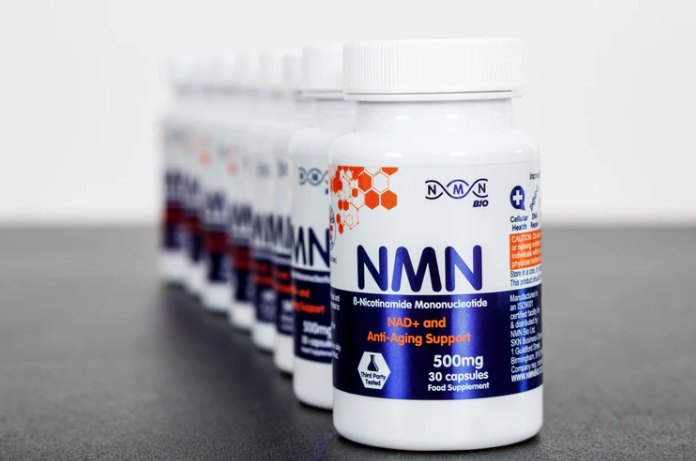
NMN BIO is a UK-based longevity supplement brand, combining clinical research with a science-led product range targeting an audience of 35 and above.
Our contribution
- UX Growth Audit covering homepage, collection pages, PDP, checkout, and Tapcart app
- New master product template replacing inconsistent per-product layouts
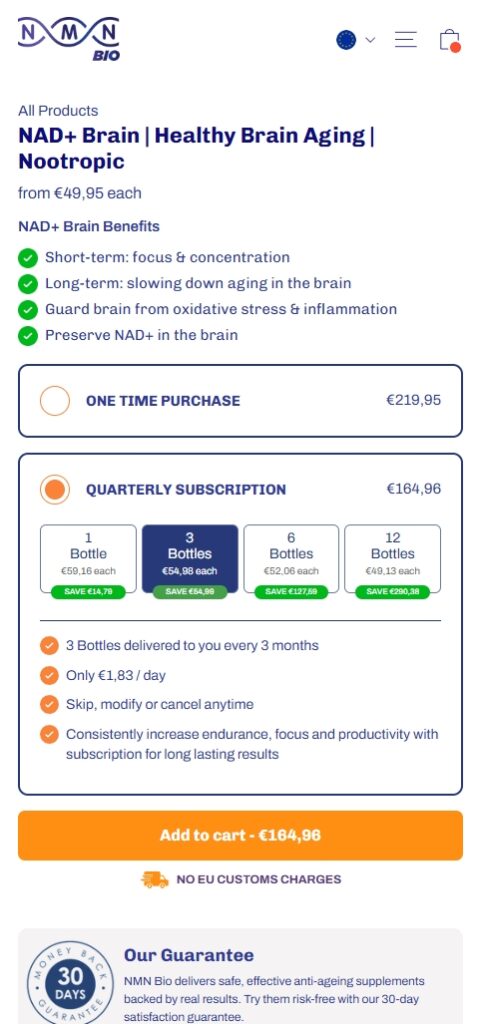
- Loop subscription widget with one-time vs. subscription separation and per-tier savings display
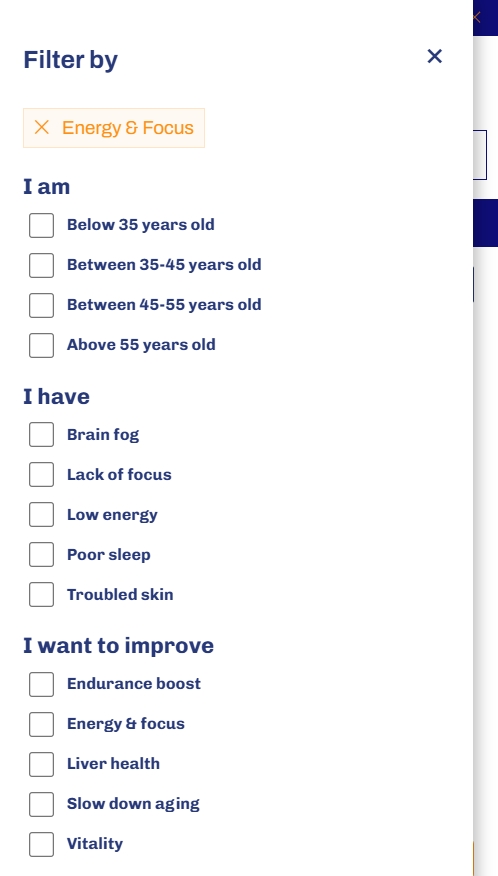
- Symptom-based search experience integrated with Shopify Search & Discovery
- Homepage mobile product showcase and dynamic collection slider
- Collection page 2×2 grid with metafield-based filter system
- Unified desktop and mobile navigation
- Tapcart app UX audit with purchase flow and search improvements
- Klaviyo flow audit with post-purchase automation roadmap
- Checkout optimisation recommendations including threshold review and post-purchase app install prompt
Tech stack
- Shopify Plus
- Loop Subscriptions
- Tapcart
- Klaviyo
- Shopify Search &
- Discovery
- Microsoft Clarity
The Challenge
NMN BIO sells a range of longevity supplements to a 35+ audience, with 70% of traffic arriving on mobile. Despite solid organic visibility, site-wide conversion had been hovering around 1.5% and declining — and the team couldn’t pinpoint why.
The audit surfaced a structural answer: almost every touchpoint funnelled customers toward one SKU. NMN500 was featured on the homepage, listed first on the collection page, and had the most developed PDP. TMG, Vapurine, and NAD Brain — all relevant to the same customer — had no passive discovery path. Separately, the subscription toggle was under-used due to a known variant-reset bug, and the Tapcart app was generating minimal revenue because the purchase flow was broken: subscription selections defaulted to one-time regardless of what the customer chose.
The Project
We ran a full UX Growth Audit — Clarity heatmaps, Shopify analytics, and manual QA across all templates — then prioritised implementation around the single biggest lever: product discoverability. Every customer entering for “low energy” or “focus” was landing on NMN500 and leaving without seeing anything else. That needed fixing at the architecture level, not the PDP level.
Product Discovery Architecture
We restructured the homepage, collection page, and search around symptom-based entry points — connecting intent (“lack of focus”, “low energy”) to the relevant collection rather than a generic product list. On mobile, the collection grid was switched to a 2×2 layout with a metafield-based filter system, giving customers a passive way to find the right product without needing to know what it’s called.
Master Product Template
Multiple per-product templates had created layout inconsistencies, duplicate H1 tags, and uneven SEO performance across the range. We replaced them with a single master template: sticky add-to-cart, mobile gallery with navigation dots, benefits above the fold, and product-specific content (dosage, “Why NAD+”) editable via metafields — no code changes needed per product.
Loop Subscription Widget
The widget was re-implemented to clearly separate one-time purchase from subscription, show savings per unit, and display the difference across 3-, 6-, and 12-bottle tiers. The variant-reset bug — where switching pack sizes dropped customers back to one-time — was resolved. Subscription intent no longer leaks at the selection step.
Tapcart Purchase Flow
The Tapcart app was generating minimal revenue because the buy flow was broken at the most basic level: every add-to-cart defaulted to one-time regardless of selection. We corrected the subscription selling plan mapping, cleaned search results (removing gift cards and internal upsell collections), and improved the bottle selector UX for the core 35+ audience.
Klaviyo Quick Fixes
Abandoned cart emails were linking to /cart — meaning a customer who abandoned on desktop and opened the recovery email on mobile saw an empty cart. We corrected these to direct checkout URLs across two affected flows, and added missing UTM parameters for tracking. Three automation opportunities were roadmapped for pre-Q4: one-time-to-subscription nudge, bundle suggestion after multi-product purchase, and a post-purchase Tapcart install prompt.
FAQs
Usually yes — it’s an architecture problem, not a design one. If your homepage, collection page, and search all surface the same product first, customers never discover the rest of your range. Restructuring those entry points around symptom or intent-based navigation gives your other products a passive discovery path without touching your theme structure.
Subscription platforms like Loop or Recharge are rarely the problem. More often it’s the widget presentation — a UI that doesn’t clearly separate one-time from subscription, doesn’t show savings across tiers, or has a bug that resets selections when customers switch variants. We fix those without platform changes.
It usually comes down to a broken purchase flow or poor product discovery inside the app. Common issues: subscription selections defaulting to one-time, irrelevant products appearing in search, and no meaningful filters. These are configuration problems — addressable without custom development.
We combine heatmap analysis (Clarity or Hotjar), Shopify analytics, page speed diagnostics, and manual QA across your key templates — homepage, collection, PDP, checkout, and mobile app if applicable. The output is a prioritised action plan with a clear commercial rationale for each item, not a list of cosmetic suggestions.
Collection layout, gallery UX, and the subscription widget are the highest-leverage starting points. Mobile users need fewer decisions per scroll — a 2×2 grid with filters, a gallery that doesn’t rely on thumbnails, and a buy box that’s visible without excessive scrolling accounts for most of the desktop-to-mobile conversion gap we see in supplement stores.
Check out some more showcases
Feel inspired by our clients

Tangl
Impossibrew