


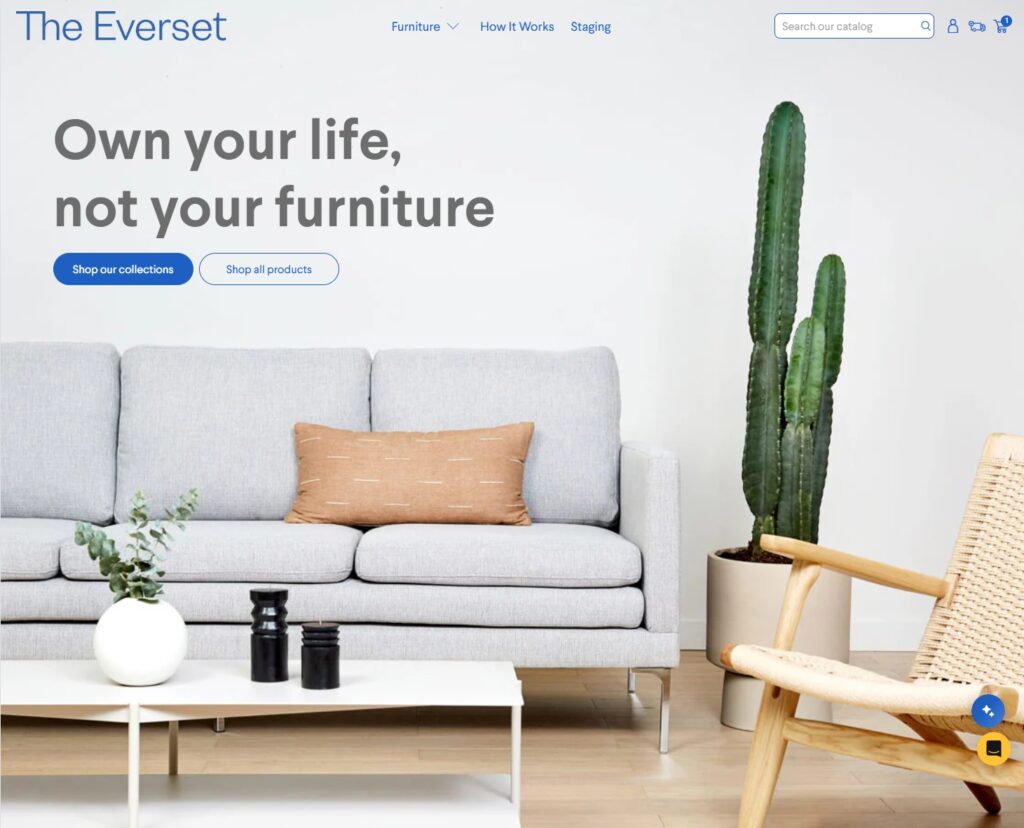
Everset is a furniture rental service built for flexible urban living — offering high-quality, stylish home furnishings through a subscription model, without the long-term commitment of ownership.
Our contribution
- Recharge to Shopify native checkout migration
- Custom customer portal feature preservation and rebuild
- Subscription plan restructuring with variant-based rental configurations
- Airtable customer and order data sync automation
- Intercom data sync fix via Zapier workflow
- Mobile front-end fixes and UX optimization
- Collection page navigation and product discoverability improvements
Tech stack
- Shopify
- Recharge
- Airtable
- Intercom
- Zapier
The Challenge
Everset’s subscription infrastructure was built around Recharge’s standalone checkout — an architecture that worked at early scale but created mounting limitations as the business grew. Recharge’s checkout sat outside Shopify’s native flow, blocking access to platform performance improvements and creating friction in the customer purchase experience.
Beyond the checkout, data fragmentation across systems was affecting day-to-day operations:
- Customer and order data wasn’t reliably syncing to Airtable, leaving the ops team working from incomplete records
- Intercom was receiving stale or missing data from Shopify, degrading support team response quality
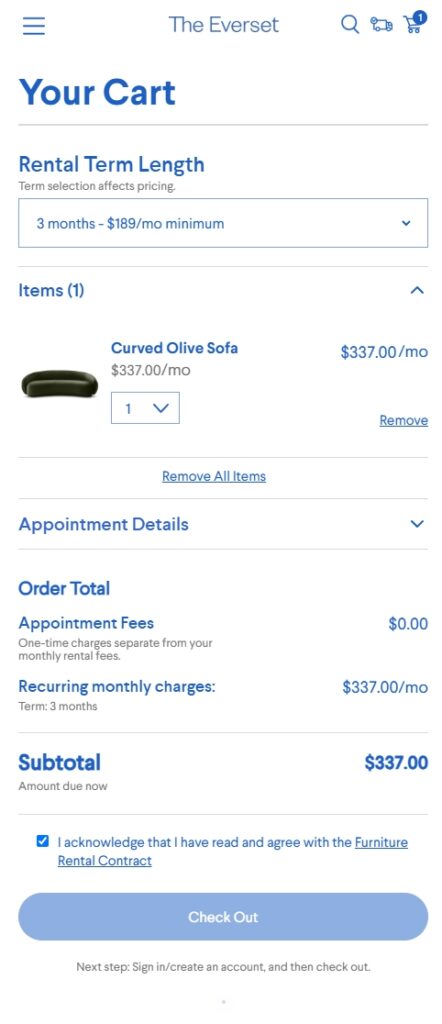
- The custom customer portal — built on top of Recharge — needed to be preserved and rebuilt as part of the migration without breaking existing subscriber flows
- Rental-specific logic (month-based variations, bundled time-period rentals) required careful handling that standard subscription setups don’t account fo
The Journey
We approached this as a migration and infrastructure project — moving Everset off a fragmented stack onto a unified, scalable foundation, while keeping their rental-specific subscription logic intact throughout.
Everset’s business model added meaningful complexity from the start. In a rental setup, each rental duration is a product variation, and items are often rented together across a fixed time period. This isn’t how most subscription businesses are structured on Shopify, and getting it wrong means broken flows at checkout or in the customer portal. Our prior experience with rental businesses meant we understood these constraints without needing to rediscover them mid-project.
Recharge to Shopify Checkout Migration
We transitioned Everset’s checkout from Recharge’s standalone flow to Shopify’s native checkout. This required rebuilding subscription features directly within the Shopify theme, updating subscription plans to support variant-based rental configurations, and refactoring legacy Recharge API calls that were no longer compatible. The custom customer portal — which managed active rentals, billing, and plan changes — was preserved and rebuilt to function correctly within the new checkout architecture.
Variant-Based Rental Architecture
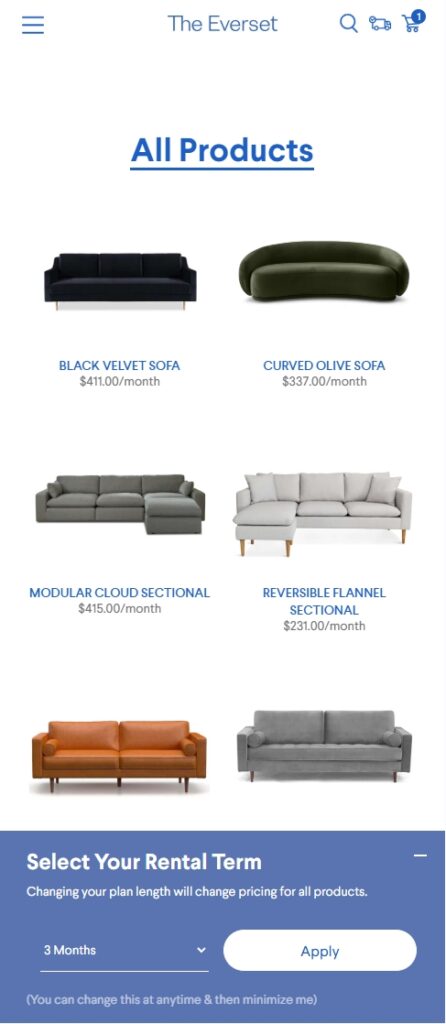
Rental duration is handled as product variants in Shopify, with each month-period as a selectable option. This approach keeps the subscription logic manageable within Recharge while making the purchase flow coherent for customers choosing rental terms. Bundled rentals — where multiple items are rented together across the same period — required additional configuration to ensure the correct variant pairings were enforced at checkout.
Airtable & Intercom Data Sync
We built an automated sync between Shopify and Airtable to keep customer and order records updated in real time, replacing the manual data exports the ops team had been relying on. For Intercom, we implemented a Zapier workflow to resolve the data flow issues that were feeding the support team incomplete customer records — ensuring support agents had accurate subscription and order status on every interaction.
Front-End Optimization & UX Fixes
We addressed a series of front-end issues that were creating friction in the customer journey: mobile layout fixes on the benefits block, collection page navigation spacing, broken prev/next buttons on product sliders, and missing visual cues for horizontal scroll content. We also reduced unnecessary header spacing to give more screen real estate to products, and applied brand color to product titles to improve visual hierarchy between title and price.
Key Outcomes
- Recharge to Shopify Checkout migration completed with all custom customer portal features intact
- Rental variant architecture preserved — month-based configurations and bundled rental logic working correctly in the new setup
- Airtable sync live — ops team no longer reliant on manual data exports for customer and order tracking
- Intercom receiving accurate, real-time subscriber data — improving support team response quality
- Mobile front-end fixes and UX improvements deployed across homepage, collection pages, and product sliders
FAQs
Yes, with the right subscription app and variant architecture. Rental durations are managed as product variants, with Recharge handling recurring billing. The key is structuring subscription plans to reflect rental-period logic — ensuring customers select the right term and that bundled rentals across multiple items are tied to the same time period.
It’s more than a settings change. Subscription features need to be rebuilt within the Shopify theme, subscription plans restructured, and any custom portal functionality preserved. Legacy API calls from the Recharge integration also need to be audited and refactored. For Everset, this included a full rebuild of the custom customer portal to work within the new checkout architecture.
Yes. Shopify order and customer data can be synced to Airtable automatically, giving operations teams a live view of subscriptions, orders, and customer records without manual exports. For Everset, this replaced a fragmented manual process and gave the team reliable, real-time data for day-to-day operations.
The main adjustments are in how products and subscriptions are structured. Rental periods become variants, subscription billing aligns with rental duration, and bundled rentals require checkout logic that ties multiple items to the same rental window. It’s workable on Shopify, but it requires experience with how rental-specific flows behave — especially around customer portal management and renewal logic.
The main risks are broken portal access, failed renewal logic, and interrupted billing for active subscribers. Mitigating these requires mapping every custom feature before migration, testing portal functionality against existing subscriber states, and ensuring the new checkout handles existing subscription contracts correctly. A phased approach with thorough pre-launch testing is essential.
Yes. Shopify order and subscription data can be synced to Intercom via Zapier or direct integration, giving support teams accurate customer context on every conversation. For Everset, a broken data flow was sending incomplete records to Intercom — a Zapier workflow resolved the sync and restored reliable data delivery to the support team.
Check out some more showcases
Feel inspired by our clients

Tangl
Impossibrew